Detective Mark Reynolds gradually flipped the final sheet in the gray folder toward Andrew, keeping the page flat between them while the officers observed from both sides of the room. Amanda stood behind the desk, hardly breathing, with Katie’s insurance policy and the forged power of attorney still laid out on the wood. Andrew had entered the front door anticipating that his wife would have finally acquiesced. Instead, he was confronted with the documents that rendered his own phone messages indefensible.
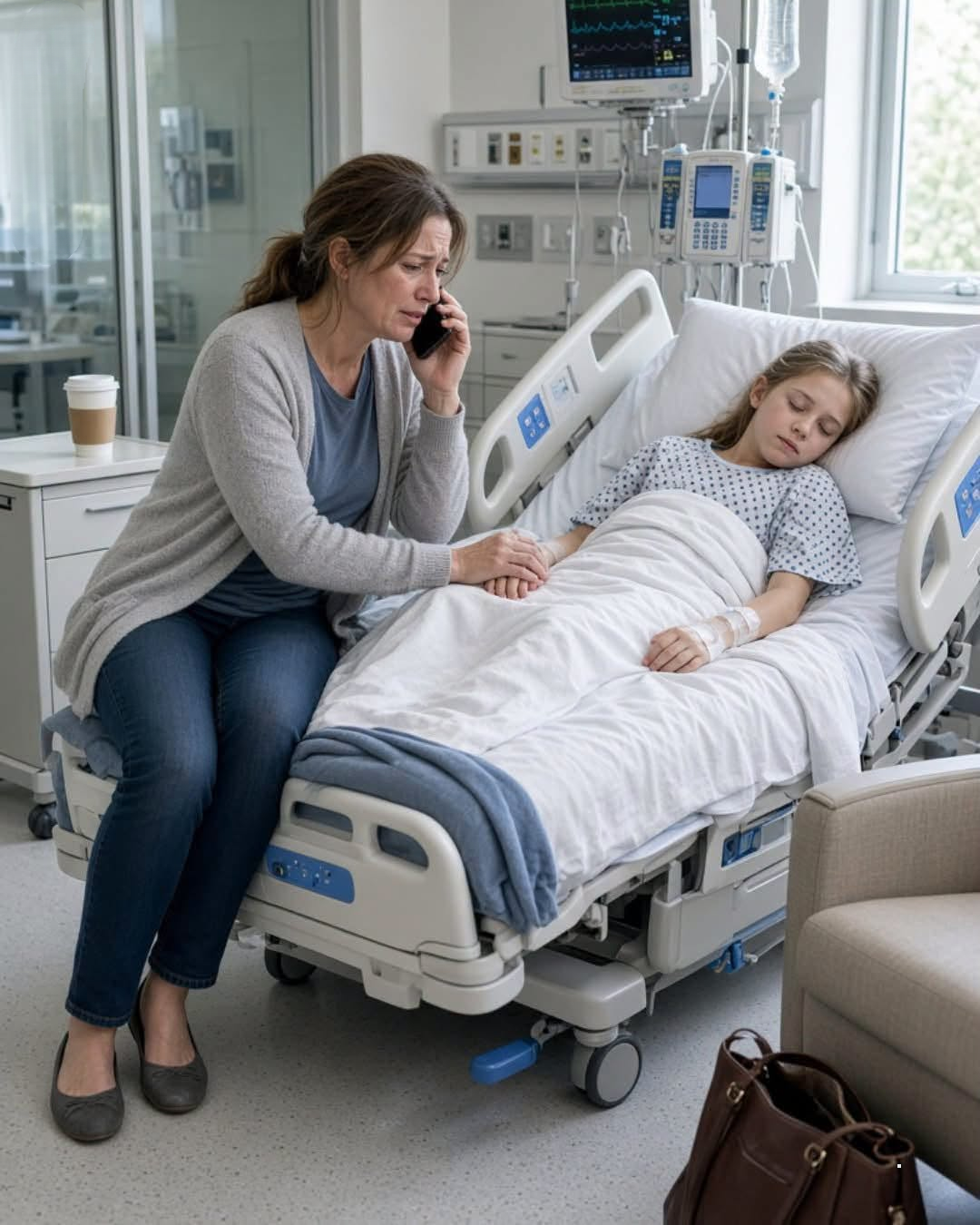
The previous night, Amanda had been sitting next to her ten-year-old daughter in intensive care, holding Katie’s cold fingers as doctors monitored swelling around her brain.
Katie had been struck by a car while walking to gymnastics practice outside Atlanta.
The driver did not stop.
Amanda had arrived at the hospital to see nurses cutting away part of Katie’s uniform and doctors treating a concussion and two broken ribs.
When the doctor informed her that Katie was stable, Amanda grasped the term for what it truly meant.
Stable did not equate to safe.
She remained by the bedside because there was nowhere else she wished to be.
Then her phone rang.
It was Barbara, her mother-in-law.
The first thing Barbara inquired was Amanda's location, despite already knowing.
Amanda replied that she was at the hospital with Katie.
Barbara responded as if Amanda had mentioned a minor appointment instead of a child being hit by a car.
Her sixtieth birthday was the following day.
Thirty guests were invited.
Amanda had promised to prepare the meal.
The chicken still required seasoning, Barbara stated, and the potatoes wouldn’t prepare themselves.
Amanda gazed through the glass wall at the nurse checking Katie’s pupils.
She insisted she was not leaving.
Barbara immediately issued a threat.
If Amanda did not return home that night, Barbara warned, she should not expect her key to work the following morning.
The threat seemed ludicrous because Barbara did not own the house.
She had never contributed to the mortgage.
However, Amanda recognized that the deeper issue was not the key.
For years, Andrew had permitted his mother to act as if every decision in their household belonged to her.
Barbara had learned that she could coerce Amanda by framing ordinary matters as conditional.
A family dinner could turn into an obligation.
A disagreement could become a threat.
A house could suddenly seem like a place Amanda was allowed to stay only as long as it pleased Barbara.
Then Andrew took the call.
He did not ask Amanda how Katie was doing.
He did not inquire about the doctors' findings.
He merely told her that Katie was stable and that she should return home for a few hours because she was upsetting everyone.
Amanda repeated his words to him.
She was upsetting everyone?
Andrew stated it was not the moment to argue.
Behind him, Barbara shouted that she would change the locks.
Andrew lowered his voice and instructed Amanda to comply with his mother’s wishes.
Amanda glanced at her daughter.
Then she said no.
Andrew warned her that she would regret complicating matters unnecessarily.
He hung up.
Amanda remained at Katie’s bedside.
At 6:17 the next morning, Katie’s fingers twitched within Amanda’s hand.
Her eyes slowly opened.
Amanda leaned toward her so quickly that a nurse had to steady her shoulder.
Katie called for her mother.
Amanda assured her she was there.
Then Katie looked toward the door.
What she said next altered everything Amanda believed about the previous night.
Katie stated that Andrew had followed her near the crosswalk.
He had been behind her.
He called her name.
When she turned around, he smiled.
Then he pushed her back.
Katie fell into the street.
The car struck her.
Amanda sought another explanation because the first was nearly impossible to accept.
Perhaps Katie was disoriented from the concussion.
Maybe medication had influenced her memory.
Maybe she had dreamt part of it.
But Katie recalled Andrew’s dark jacket.
She remembered his white sneakers.
Most importantly, she recalled something he had said before the car reached her.
He instructed her not to tell Amanda about the papers.
Amanda asked which papers.
Katie replied they were the ones with her name.
A detective arrived in less than an hour.
Katie recounted her story with Amanda beside her and then repeated it with a child advocate present.
The details remained in the same sequence.
Andrew had followed her for half a block.
He had called her name.
He had smiled when she turned.
He had pushed her into traffic.
Detective Reynolds listened intently.
Before leaving the room, he asked if Andrew was aware that Katie was awake.
Amanda said no.
Reynolds advised her to keep it that way.
Two officers transported Amanda home.
The house appeared ordinary enough to make what had occurred feel even more surreal.
Andrew’s dark jacket still hung by the front door.
Near one cuff, Amanda noticed a blue thread.
It matched Katie’s school cardigan.
That small piece of fabric did not prove the entire narrative, but it provided Reynolds with something tangible to investigate.
Then there was the movie ticket.
It was printed for the previous evening and placed on Andrew’s nightstand as if someone wanted it discovered.
It looked less like a forgotten ticket and more like an alibi awaiting an audience.
In the kitchen, half a bottle of whiskey stood next to one immaculate glass.
Nothing about the scene clarified why Andrew had supposedly been elsewhere when Katie was struck.
Then Reynolds examined Andrew’s phone.
He asked Amanda if she knew the password.
She did.
It was their wedding date.
The password unlocked the phone.
The last conversation was with an unsaved number.
The messages were brief.
Everything is ready.
The girl needs to disappear.
Tomorrow?
It’s done.
Amanda felt her knees weaken.
She remained standing because Katie was still in the hospital, and because the officers were now observing the same words she was.
There was no need for Amanda to explain why the messages alarmed her.
Reynolds photographed them.
The inquiry was no longer merely whether Andrew had followed Katie.
The inquiry was why someone had been discussing making a girl vanish.
Amanda approached Andrew’s desk searching for Katie’s insurance card.
The bottom drawer was locked.
One of the officers searched beneath the desk and discovered a small key taped underneath.
He peeled it off and handed it to Reynolds.
That was where the gray folder entered the narrative.
Reynolds opened the drawer and discovered a thick stack of papers.
The first page was an insurance policy on Katie for $250,000.
Andrew was the sole beneficiary.
Amanda had to double-check the amount.
Her daughter was ten years old.
She had just been struck by a car.
And her husband stood to inherit a quarter of a million dollars if she died.
Behind the policy was a power of attorney that appeared to bear Amanda’s signature.
It granted Andrew the authority to sell their house.
Amanda had never signed it.
That indicated that the threat Barbara had made about Amanda losing access to the house was suddenly much less random than it had sounded over the phone.
The house itself had become part of the scheme.
Then Reynolds found the condo listings.
They were luxury condos in Miami.
Across the top listing, Andrew had penned a brief note in red ink.
After the problem is handled.
The phrase altered the interpretation of the earlier messages on his phone.
Before the folder was opened, the messages could still have been understood in multiple ways.
After the insurance policy, the forged signature, and the condo listings appeared together, that ambiguity became increasingly difficult to maintain.
The pieces were beginning to align in the same direction.
Then someone slammed a car door outside.
Andrew was home.
His voice echoed through the front hall.
He called Amanda’s name and stated that Barbara had informed him she had finally come to her senses.
He stepped inside expecting to find the argument settled.
Instead, he encountered officers in his house.
He saw the phone.
Then he noticed the insurance policy.
The smile on his face had nowhere apparent to go.
Amanda remained behind the desk with the folder open.
Reynolds did not rush to accuse him.
He merely picked up the final sheet from the folder.
Then he deliberately turned it toward Andrew.
That motion mattered because everything in the room had shifted without Amanda needing to deliver a speech.
The woman Andrew had anticipated to pressure was no longer disputing Barbara’s birthday dinner.
She was standing in a house whose ownership Andrew had seemingly attempted to control with a signature she never provided.
Her daughter was alive because Katie had opened her eyes and spoken the truth.
The insurance policy provided Andrew with a financial motive.
The messages presented the investigation with a troubling dialogue.
The blue thread linked his jacket to Katie’s attire.
The movie ticket resembled an attempted alibi.
And the gray folder connected the money, the house, and the future Andrew appeared to have been plotting.
The birthday demand now sounded different too.
Barbara had wanted Amanda out of the hospital on the same night Katie was injured.
Andrew had supported her.
Amanda had refused.
That refusal kept her beside Katie long enough for Katie to awaken and identify what had transpired.
The most alarming aspect was how ordinary the pressure had initially sounded.
Cook dinner.
Come home for a few hours.
Stop upsetting everyone.
Do what she wants.
Each statement could be dismissed individually as family conflict.
Together, after Katie’s account and the documents, they became part of a much darker pattern.
Amanda had spent years being labeled dramatic whenever she resisted Barbara.
Now the very thing Barbara had labeled drama was the reason Amanda remained at the hospital when Katie opened her eyes.
And the woman Barbara had attempted to separate from her injured daughter was now standing beside evidence that could place her own husband in serious jeopardy.
Andrew still had not clarified the jacket.
He had not explained the messages.
He had not justified why he was the sole beneficiary of Katie’s insurance policy.
He had not accounted for the document bearing Amanda’s forged signature.
He had not explained the Miami listings.
Most importantly, he had not clarified what he meant by the words inscribed across the listing: after the problem is handled.
Reynolds held the final page toward him.
Amanda observed Andrew looking at it.
Whatever he had planned for the house, whatever Barbara had anticipated Amanda to concede, and whatever Andrew believed he could conceal behind a movie ticket and a few family demands had all converged at the same desk.
The investigation had begun with a hit-and-run.
Then Katie recalled a push.
Then a phone revealed a conversation.
Then a locked drawer unveiled money, property, and a forged signature.
Now there was one more page between the detective and the man who had expected to enter his home without repercussions.
Andrew had returned anticipating his wife to apologize for resisting his mother.
Instead, Detective Reynolds was waiting with the last sheet in his hand.
And for the first time, Andrew had no control over which part of the story unfolded next.